Expression, Impact and Income: What Are You Really Building For?
By Vijay Shenoi
Whenever a new idea excites us—a shop, a farm, a consulting practice or a small business—we often begin with the same question:
“How can I make this happen?”
We start thinking about names, designs, investments and execution. But there is another question that deserves our attention first:
“What do I want this idea to achieve?”
I have been reflecting on a distinction in my own thinking: the desire to share my experience with the world is different from the desire to solve a customer’s problem.
Both are worthwhile. But they lead to different decisions.
I find it useful to look at an idea through three lenses: expression, impact and income.
Expression: What do I want to bring into the world?
Expression begins with something within us.
It may be knowledge we want to share, a belief we want to communicate, a creative interest we want to explore or an experience we want others to understand.
A shop can reflect our pride in serving a neighbourhood. A farm can reflect our connection with nature. A workshop can give form to lessons learned over years of work.
The central question is:
“What do I want to express, create or contribute?”
Expression has value even before it earns money. It can bring clarity, satisfaction, learning and a sense of identity.
The difficulty begins when we expect personal meaning to automatically create commercial demand.
I may feel strongly about a subject. I may have useful experience. Yet the customer still has their own priorities.
My enthusiasm explains why I want to create something. It does not, by itself, explain why someone else would choose it.
Impact: What becomes better for someone else?
Impact shifts our attention towards the person we hope to serve.
It asks us to understand their circumstances, frustrations and aspirations. It also asks us to look beyond our intentions and examine what actually changes.
The central question is:
“Whose situation will improve, and how will I recognise that improvement?”
An article may help a manager conduct a clearer conversation. A service may save a family hours of effort. A learning programme may help someone perform a task with greater confidence.
These are more specific outcomes than “sharing knowledge” or “helping people.”
Specificity matters because it gives us something to test.
Did the reader use the idea? Did the customer save time? Did the participant apply what they learned?
Appreciation is encouraging. Evidence of improvement tells us more about impact.
Income: What makes the effort commercially sustainable?
Income introduces another set of questions.
Who will pay? What will they pay for? How frequently will they need it? Can we deliver it consistently at a cost that leaves a reasonable return?
The central question is:
“Who values this enough to pay, and can I serve them sustainably?”
A useful idea may still struggle as a business. The beneficiary may be unable to pay. The need may arise infrequently. The cost of reaching and serving customers may be too high.
Equally, receiving money does not automatically mean a venture is healthy. Revenue must be considered alongside expenses, effort and the founder’s time.
Commercial sustainability requires a workable relationship between value delivered, price received and resources consumed.
Where the confusion begins
These three motivations can coexist. The problem arises when we leave our expectations unspoken.
We open a shop because we have always wanted a business of our own, then discover that its daily demands do not match the life we imagined.
We launch a service because we want to help people, then discover that we have no clear way to fund its delivery.
We pursue a business for income, but keep shaping it around our personal interests even when customers ask for something different.
In each case, the project is being pulled towards different definitions of success.
A better approach is to identify a primary purpose.
If expression leads, success might include creating something that reflects our values and abilities.
If impact leads, success should include a clear improvement for a defined group of people.
If income leads, paying demand and viable delivery economics must influence the idea from the beginning.
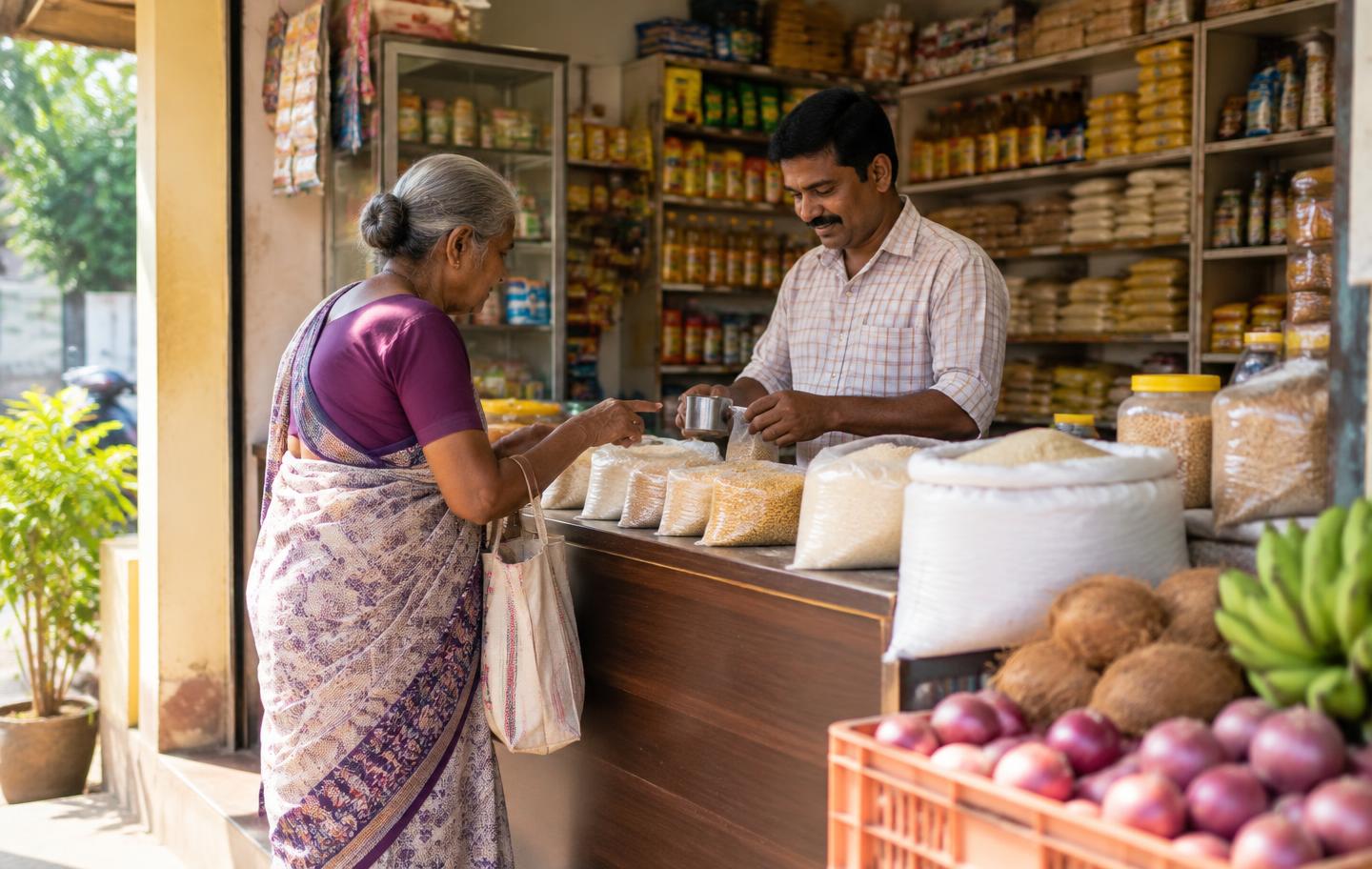
One kirana shop, three different motivations
Consider someone planning to open a small kirana shop in their neighbourhood.
Through the lens of expression, the shop may fulfil a long-held wish to become an entrepreneur. The owner may enjoy meeting people, selecting products and creating a welcoming place. The shop expresses their identity, independence and pride in running something of their own.
Through the lens of impact, the starting point is the neighbourhood’s needs. Perhaps elderly residents find it difficult to travel for essentials. Working families may need convenient evening purchases. Customers may struggle to find everyday items reliably. The owner responds with suitable opening hours, dependable stock and a manageable home-delivery service.
Through the lens of income, the owner examines whether enough customers will buy regularly, which products earn adequate margins, and whether sales can cover rent, electricity, wages, wastage and a fair return for their own effort. Money tied up in slow-moving stock and unpaid customer credit also needs attention.
These motivations influence everyday choices.
The owner may personally prefer stocking premium products. But nearby families may primarily need affordable essentials in small quantities. Free delivery may help customers, but it needs to be organised so that its cost remains manageable.
The owner’s preferences shape the shop’s character. Customers’ needs shape its usefulness. Sound economics support its survival.
The same shop can serve all three purposes. What matters is recognising each one and making deliberate choices when they compete.
Five questions before the next commitment
Before investing more time, money or energy in an idea, I would ask:
- Which comes first for me here: expression, impact or income?
- Who specifically is this for, and what matters to them?
- What would success look like six months from now?
- What is the smallest practical test of my assumptions?
- What evidence would make me continue, change direction or stop?
For the kirana shop, the first step might be speaking with nearby households, understanding what they buy frequently and identifying what existing shops do not provide reliably. Estimating costs and testing a limited offering can reveal more than spending weeks choosing a name or designing a signboard.
The aim is to learn before making a larger commitment.
I want to carry this distinction into the ideas I pursue: expression gives me a reason to begin, impact asks me to understand others, and income asks me to make the effort sustainable.
Before asking, “Can I build this?”, I want to ask, “What am I building it for—and what evidence will show that it is working?”